EmailEmail  PrintPrint  a a a

inside pebble hill

Building Pebble Hill
The Perfect Collaboration Between Client and Architect

featured in The Scene magazine

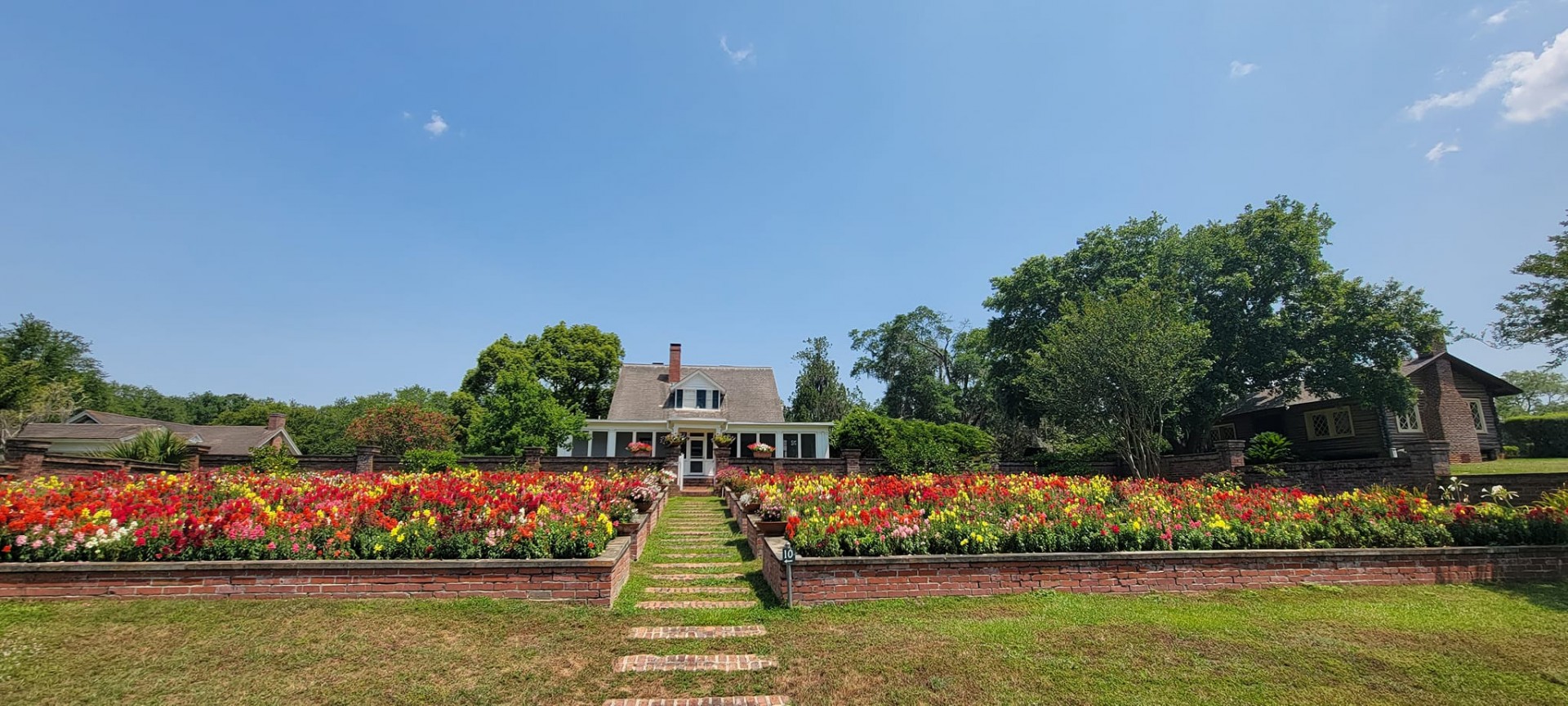
In 1901 Kate Benedict Hanna Ireland, later Harvey, received Pebble Hill as a gift from her father. At the time, the plantation consisted primarily of a crumbling 1851 farm house that was in the process of being restored, a small number of dilapidated out buildings and a few hundred acres of land. When Kate died in 1936, she passed to her daughter Elisabeth “Pansy” Ireland, later Poe, the beautiful plantation property we know today. Kate was a builder, building her South Georgia land holdings to over 10,000 acres, and building 8 major red brick neoclassical structures that are the heart of the plantation. Additionally, she built three school buildings, gardens, a pool, tennis courts, numerous homes for employees, beautiful drives, barns, kennels, and other assorted out buildings.

Kate was enthusiastic, talented, involved, and, frankly, a woman who knew what she wanted. As her attachment to South Georgia grew over the years, and her plans for Pebble Hill expanded, she needed the right person to help turn her dreams for the beautiful country estate into reality. She found the perfect collaborator in family friend, Cleveland architect, Abram Garfield. It appears that they had a great working relationship. Abe Garfield transformed Kate’s ideas, wishes and taste gracefully into stylish, soundly constructed, and efficient structures.

Abram Garfield, the son of President Garfield, attended first Williams College then MIT. It is at MIT where he was immersed in the Beaux Arts design tradition, so popular at the time, as well as the emerging engineering techniques that define the beginning of modern architecture. He built homes for Cleveland’s wealthiest citizens in styles as varied as Tudor Revival, Italianate, French Empire and Jeffersonian Neoclassical. He was equally at home building multistory commercial buildings employing steel skeletons or reinforced-concrete. At Pebble Hill he put both his magnificent sense of design and his extensive engineering ability to use fulfilling the desires of his friend and client.

The earliest of Abram Garfield’s building at Pebble Hill is the Plantation Store built in 1911. It is here that the plantation’s red-brick neoclassical style was established. The building is typical Jeffersonian with the white details accurately replicating those of Doric Greek architecture. In this store products from the Pebble Hill Dairy were sold along with staples needed by families living on the plantation. Large cold storage lockers were also included in the structure for storing game and other meats served in the Main House.

In 1914 the loggia wing was added to the original 1851 house. The loggia, though classical, draws its design influence from Roman architecture rather than Greek. The arcade with its round arches is beautifully designed, and in the Beaux Arts tradition, accurately duplicates the proportions of antique structures. The loggia wing did not burn in 1934 along with the 1851 original plantation house. This saved section was incorporated into Garfield’s design for the Main House we see today at Pebble Hill. The clapboarded exterior was removed and replaced by masonry, not only for design consistence but also to reduce the building’s susceptibility to fire.

1911 Plantation Store

The fire of 1934 brings us to the crown jewel of the Kate/Garfield collaboration, the new Main House. People who have lost a home to fire most often place “fire resistance” at the top of their wish list when rebuilding. It appears that this axiom is true for Kate. The new Main House is as fire-proof as a building can be. The masonry basement walls are 16” thick. On the first and second floors, the masonry walls narrow to 12”. Reinforced-concrete cast in removable pans forms the joists between floors. On top of the joists are 6” reinforced-concrete floor slabs covered with aesthetically pleasing marble or wooden flooring. The whole building is capped with fire-proof roofing materials.

There are several design details that tell us of Kate’s desire to tie the new house to the old one designed by John Wind. The Wind house was laid out in the shape of an “H” which allowed the front porch to be recessed between two protruding wings. The front porch of the new house is also recessed between two wings. The columns set on piers in front of the porch itself, is a design detail often seen in Wind houses. The lead line patterns of the glass lights surrounding the front door of the new house closely resemble those of the older structure.

The interior is filled with a plethora of beautiful architectural details. The grand curving staircase is not attached to the north wall. This “free standing” approach was at once innovative and daring. Built and assembled in Cleveland, Garfield had the staircase tested for structural integrity before having it disassembled and shipped to Pebble Hill. The dome over the stair hall is a beautiful feature created for interior affect only. The top of the dome resides quietly in the attic and is not visible on the roof. The plaster moldings are magnificent, and, in Beaux Arts fashion, perfect replicas of their historic predecessors.

Library HallThe elegant Library Hall is Garfield’s answer to Kate’s aversion to books lining the walls of rooms. She found libraries dark and oppressive. The elegant stained wood bookcases in the Library Hall provided not only a place for books to reside in a time when reading was the major way of disseminating knowledge, but also provided a warm and genteel entry into the much lighter and informal Red Drawing Room. Pebble Hill does not have a den per se, but the Red Room serves primarily the same function. It is here that family and friends gathered for more intimate after dinner conversation. Of course the Big Room with its French doors, coffered ceiling, large fireplace and multitude of windows is the home’s design masterpiece. The large room isn’t too large. The feeling is light, friendly, warm, comfortable, and elegant without being imposing. The lovely room is the perfect expression of Kate’s personality and the grand tribute to the Kate/Garfield collaboration.

Come and enjoy the magnificent architecture at Pebble Hill. Take a look at our Photos portion of the website to see more images of Pebble Hill Plantation. 


To Learn more about Pebble Hill, please visit The Pebble Hill Plantation Archive Page, which contains access to a myriad of articles, records and artifacts accessible to online patrons.


WeddingWire Rated 2012 Weddings, Wedding, Wedding Venues
nimblecmsan NTS product
Check Availability
       
Find Us Follow Us Subscribe Notify